

S2K Commerce - Products Dropdown
Actions
Web Content Viewer
Actions
Fuel Line Technical Center
Pro Marine Technical Center
Marine Fuel Line Technical Center
Choosing marine fuel hose involves more than matching the diameter. The hose type, installation location, fuel-system design, primer bulb, fittings, clamps and fuel itself all affect the correct setup.
This guide brings together Pro Marine's Type A and Type B marine fuel hose, primer bulbs, clamps, Tygon tubing, bleed hose, fuel treatments and installation information to help boat owners and marine technicians select the correct components.
Marine Fuel Hose Finder
Start here if you know the hose inside diameter. Then choose the hose construction that matches the installation.
1/4" Fuel Line
Common exposed / portable-style application where Type B hose is permitted.
Clamp: 4-133
Primer: 8002
Use where the installation requires Type A fire-resistant hose construction.
Clamp: 4-170
Primer: 8002
5/16" Fuel Line
Common exposed / above-deck option where Type B construction is permitted.
Clamp: 4-153
Primer: 8004
Fire-resistant Type A construction for applications requiring Type A hose.
Clamp: 4-170
Primer: 8004
Genuine Mercury 5/16" bulk fuel hose for compatible Mercury applications.
Clamp: 4-145
Primer: 8004
3/8" Fuel Line
3/8" Type B hose for compatible exposed fuel-line installations.
Clamp: 4-185
Primer: 8005
3/8" Type A hose for installations requiring fire-resistant construction.
Clamp: 4-185
Primer: 8005
1/2" Fuel Line
Large 1/2" Type A1 fuel supply hose for higher-flow marine fuel systems requiring this hose diameter.
Clamp: German-Style 4-4
Primer Bulb: Normally not used on a 1/2" fuel-line system
If the hose is part of a permanent fuel-feed system, runs through an enclosed area, or the engine/boat manufacturer specifies Type A1, use Type A1 unless the application documentation specifically allows something else.
Type B is generally associated with exposed or portable fuel-line applications, but installation requirements — not simply whether you can see the hose — determine what is allowed.
Understanding USCG Type A1, A2, B1 and B2 Fuel Hose
Marine fuel hose classifications describe both fuel permeation performance and, for Type A hose, fire resistance.
| Hose Type | Permeation Class | USCG Fire Test | General Meaning |
|---|---|---|---|
| A1 | Class 1 | Yes | Lower-permeation hose with the Type A fire-resistance requirement. |
| A2 | Class 2 | Yes | Type A fire-resistant hose with the higher Class 2 permeation allowance. |
| B1 | Class 1 | No Type A fire test | Lower-permeation Type B hose. |
| B2 | Class 2 | No Type A fire test | Type B hose with the higher Class 2 permeation allowance. |
The "1" and "2" Matter
Under the traditional USCG definitions, Class 1 hose has a lower permitted permeation rate than Class 2 hose.
This is why A1 and B1 are typically associated with fuel-feed applications, while A2/B2 are more commonly associated with certain fill or vent applications.
Type A Adds Fire Resistance
The major distinction between A and B is that Type A hose must also satisfy the applicable USCG fire test.
That additional protection is why Type A1 is commonly specified in permanent and enclosed fuel-system applications.
Where Does USCG Type A1 Have to Be Used?
Under federal recreational-boat fuel-system rules, hose between a fuel pump and carburetor must be Type A1.
Hose from the fuel tank to the engine must be Type A1, or Type B1 only when the specific drainage limitation in the regulation is satisfied.
Fill and vent lines have their own A1/A2 and limited B1/B2 provisions. This is why "above deck" and "below deck" should be treated as useful selection shortcuts rather than the complete regulatory test.
What About A1-15 and Modern EPA Fuel Hose?
Modern marine gasoline fuel systems are also subject to EPA evaporative emission standards. EPA-certified nonmetal fuel lines are required to meet substantially lower permeation limits than the older USCG Class 1 definition.
When replacing newer fuel-system components, inspect the markings on the original hose and replacement hose. Current hose may include EPA-compliant or low-permeation markings in addition to the familiar USCG A/B classification.
Pro Marine Fuel Hose Size and Clamp Chart
Why the Same Hose ID Can Use Different Clamps
A hose labeled 5/16" is describing its inside diameter, not its outside diameter.
Different hose constructions have different wall thicknesses. That means two 5/16" hoses can require completely different clamp sizes.
This is why, for example:
- 5/16" MPI Type B uses Oetiker 4-153
- 5/16" MPI Type A uses Oetiker 4-170
- 5/16" Mercury OEM silver hose uses Oetiker 4-145
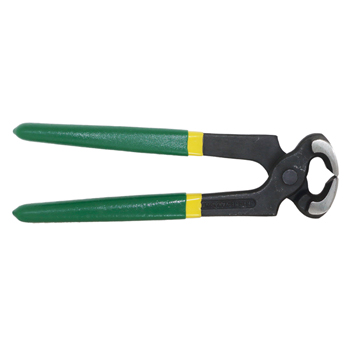 Oetiker Standard Jaw Pincer - 14118CJ
Tool for properly crimping compatible Oetiker ear clamps.
View Clamp Tool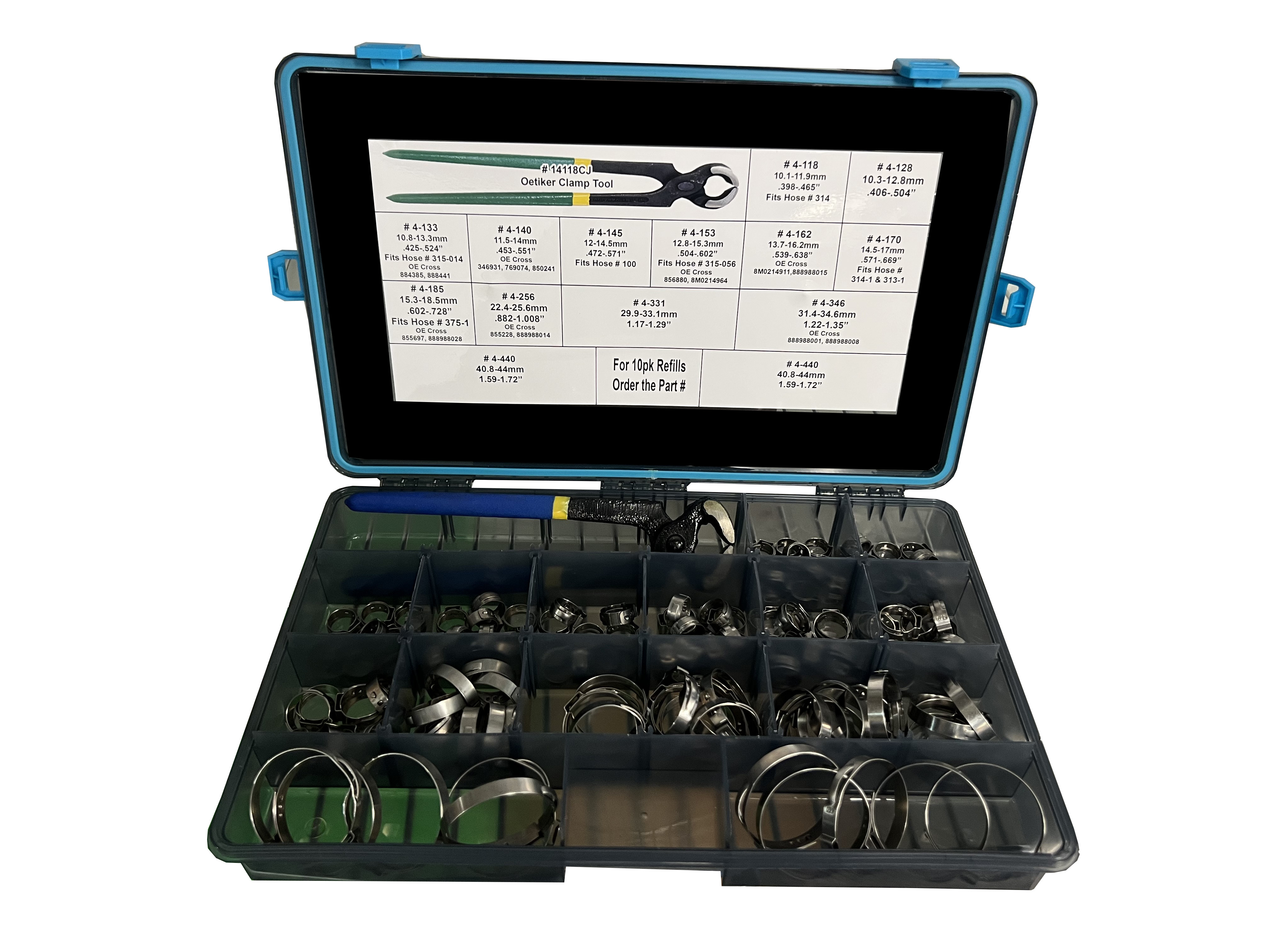 Oetiker Clamp Pack with Tool
Assortment of commonly used marine Oetiker clamp sizes with the installation tool included.
View Clamp PackMarine Primer Bulb Guide
A primer bulb is a small hand-operated pump installed in an outboard fuel line. Internal one-way valves allow repeated squeezes to draw fuel from the tank and move it toward the engine.
| Fuel Hose ID | Primer Bulb | Product |
|---|---|---|
| 1/4" | 8002 | 1/4" Primer Bulb |
| 5/16" | 8004 | 5/16" Primer Bulb |
| 3/8" | 8005 | 3/8" Primer Bulb |
Which Direction Does a Primer Bulb Go?
The arrow on the primer bulb should point toward the engine.
Does a 1/2" Fuel Line Use a Primer Bulb?
Normally, no. A 1/2" fuel supply line generally indicates a larger, higher-flow fuel system where an inline hand primer bulb is not normally part of the system design.
Ethanol-Blended Gasoline and Marine Fuel Systems
Ethanol-blended gasoline deserves special attention in boats because marine fuel systems often sit unused for longer periods and operate in a moisture-rich environment.
Ethanol and Water
Ethanol is hygroscopic, meaning it can absorb water. Water can enter a boat's fuel system through contamination, condensation and normal exposure to the marine environment.
If enough water accumulates, the ethanol/water portion of the fuel can separate from the gasoline. This is commonly called phase separation.
Ethanol Can Loosen Existing Deposits
Ethanol is also an effective solvent. When introduced into an older fuel system, it can loosen gum, varnish and debris that accumulated in tanks and fuel lines.
That material can then travel downstream and contribute to clogged filters, carburetor passages or fuel injectors.
Ethanol and Older Fuel Hose
Older hoses that were not designed for alcohol-containing fuels may deteriorate when exposed to ethanol.
Possible signs include:
- Soft or swollen hose
- Hard or brittle hose
- Cracking
- Fuel seepage
- Loose hose-to-fitting connections
- Interior hose deterioration
Do not assume an old hose is safe simply because the exterior still looks acceptable.
E15 contains up to 15% ethanol. EPA regulations do not permit E15 for use in boats or other nonroad gasoline equipment. Follow the engine manufacturer's fuel recommendations and the labeling at the fuel pump.
Good Fuel Practices for Boats
- Buy fuel from a station or marina with high fuel turnover.
- Use the ethanol level approved by your engine manufacturer.
- Never use E15 in a recreational marine gasoline engine.
- Keep water out of the fuel system whenever possible.
- Use a properly sized fuel/water-separating filter where specified.
- Inspect fuel lines, primer bulbs and fittings regularly.
- Replace deteriorated or questionable hose.
- Use fuel stabilizer when appropriate, especially before storage.
- Do not expect an additive to repair damaged hose or restore severely stale fuel.
Tygon Fuel and Oil Hose Guide
Tygon tubing is used in a number of small fuel, oil-injection and bleed-line applications where flexible small-diameter tubing is required.
The transparent construction is particularly useful for service work because it allows the technician to visually inspect fluid inside the line.
| Item | ID | Length | Typical Use |
|---|---|---|---|
| 255 | 3/32" | 10 ft | Small PWC oil-injection line |
| 256 | 3/16" | 10 ft | PWC fuel-line applications |
| 257 | 1/4" | 10 ft | PWC / compatible MerCruiser pump-to-carb use |
| 258 | 5/16" | 10 ft | Compatible PWC and outboard fuel circuits |
| 259 | 1/8" | 10 ft | Transparent bleed-line applications |
A 5/16" Tygon hose and a 5/16" USCG-rated marine fuel hose may share the same inside diameter but serve completely different applications. Match the hose to the engine system and required certification.
Marine Bleed Hose Guide
Small bleed hoses are used within compatible engine fuel, lubrication, induction and crankcase-routing systems.
The required hose diameter is important because these lines connect to very small fittings and must fit correctly to prevent leakage.
| Item | ID | Length | Type |
|---|---|---|---|
| 8050 | 1/16" | 10 ft | Sierra universal bleed hose |
| 8048 | 3/32" | 10 ft | Sierra universal bleed hose |
| 259 | 1/8" | 10 ft | Transparent Tygon bleed hose |
Bleed Hose is Not Main Fuel Hose
Bleed hose should not be confused with the larger fuel-supply hose between the fuel tank and engine. Always use the hose construction and diameter specified for the particular engine circuit.
Marine Fuel Additives: What They Do and When to Use Them
"Fuel additive" is a broad category. Some products are primarily deposit cleaners, some are fuel stabilizers, some provide several fuel-treatment functions, and others are service chemicals designed for engine decarbonizing rather than routine addition to the fuel tank.
Choosing the correct product depends on what you are trying to accomplish.
Yamaha Ring Free PLUS
 Yamaha Ring Free PLUS - 12 oz
Yamaha fuel additive formulated for deposit control and fuel-system corrosion protection. Yamaha states that it helps clean injectors, carburetors, intake valves, intake ports and combustion chambers.
Shop 12 oz Ring Free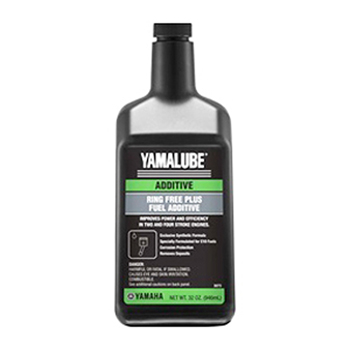 Yamaha Ring Free PLUS - 32 oz
Larger-size option for customers who routinely treat fuel or service multiple engines.
Shop 32 oz Ring FreeYamaha specifically recommends Ring Free PLUS for deposit control and protection of fuel-system metals, including protection related to the marine environment and ethanol-blended fuel.
Mercury / Quicksilver Quickleen
 Quickleen Engine and Fuel System Cleaner - 12 oz
Quickleen is primarily a deposit and carbon cleaner. Mercury states that it cleans carburetors, injectors, intake valves, spark plugs, piston crowns and cylinder heads.
Quickleen is not a fuel stabilizer. If storage stability is the goal, use a product specifically intended to stabilize fuel.
Shop QuickleenSentry Fuel Treatment
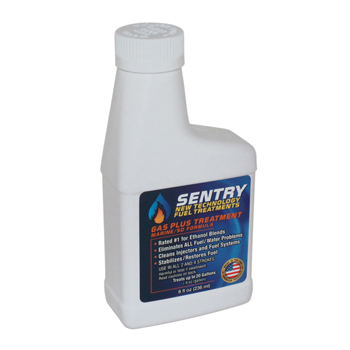 Sentry Fuel Treatment - 8 oz
Compact Sentry gasoline fuel treatment for marine fuel-system maintenance. Sentry markets its gasoline treatments as multifunctional products intended to help with fuel stability, deposits, moisture-related problems and fuel-system lubrication.
Shop Sentry 8 oz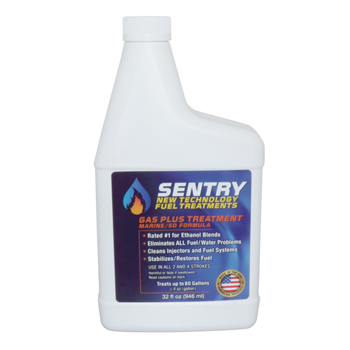 Sentry Fuel Treatment - 32 oz
Larger Sentry fuel-treatment size for frequent users, marine shops and larger fuel tanks.
Shop Sentry 32 ozFollow the bottle label for the correct treatment ratio. Fuel additives can help manage fuel-system issues, but they are not a substitute for physically removing significant water contamination or replacing deteriorated components.
CRC Marine Gasoline Fuel Stabilizer
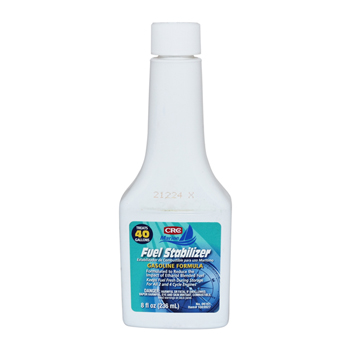 CRC Marine Fuel Stabilizer - 8 oz - 06161
Marine gasoline stabilizer formulated to help keep stored fuel fresh and reduce gum, resin and corrosion-related problems.
The 8 oz bottle treats up to approximately 40 gallons when used at the manufacturer's standard 1 oz per 5 gallons ratio.
Shop CRC 8 oz CRC Marine Fuel Stabilizer - 1 Gallon - 06164
Bulk gallon size of CRC Marine Gasoline Fuel Stabilizer for marine shops, larger boats and customers treating larger quantities of fuel.
At the standard treatment ratio, one gallon treats approximately 640 gallons of gasoline.
Shop CRC GallonJohnson / Evinrude Engine Tuner
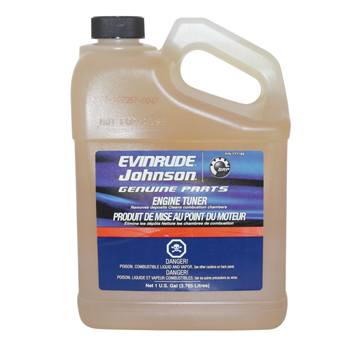 Johnson / Evinrude Engine Tuner - Gallon - 777189
Engine Tuner is different from a normal everyday fuel-treatment product. It is an engine-service cleaner used during tune-up / decarbonizing procedures to help remove gum, varnish and carbon deposits from rings, pistons, valves and ports.
Do not treat this as a routine pour-in-the-tank additive. Follow the Johnson/Evinrude service procedure and product-label instructions for the application being serviced.
Shop Engine TunerWhich Fuel Treatment Should I Choose?
| Goal | Product Type | Options |
|---|---|---|
| Routine deposit control | Fuel-system / combustion cleaner | Yamaha Ring Free PLUS |
| Aggressive carbon cleaning during season | Engine & fuel-system cleaner | Mercury / Quicksilver Quickleen |
| General multifunction fuel treatment | Gasoline fuel treatment | Sentry 851160 / 82079 |
| Fuel storage | Fuel stabilizer | CRC 06161 / 06164 |
| Engine decarbonizing service | Service chemical | Johnson/Evinrude 777189 Engine Tuner |
Fuel-Line Troubleshooting Guide
Primer Bulb Will Not Get Firm
Possible causes include:
- Air leak at a hose or fitting
- Loose clamp
- Cracked fuel hose
- Damaged primer-bulb check valve
- Fuel-tank pickup restriction
- Anti-siphon valve restriction
- Empty tank or fuel supply interruption
Primer Bulb Collapses While Running
A collapsing bulb commonly indicates that the engine is pulling against a restriction on the tank side of the bulb.
Areas to inspect include:
- Tank vent
- Anti-siphon valve
- Fuel pickup
- Restricted fuel filter
- Kinked or internally damaged hose
Fuel Hose is Hard and Cracking
Replace it. A hardened fuel line has lost flexibility and should not be trusted simply because it has not started leaking yet.
Fuel Hose Feels Soft or Swollen
Softening or swelling may indicate chemical incompatibility or internal hose deterioration. Verify fuel compatibility and replace the hose with the correct marine-rated product.
Fuel Smell in the Boat
Treat unexplained gasoline odor seriously. Inspect the tank, hose, connections, filters, fittings, primer bulb and other fuel-system components before operating the boat.
Marine Fuel Hose FAQ
What is the difference between Type A and Type B marine fuel hose?
Type A hose includes an additional USCG fire-resistance requirement. Type B does not have that Type A fire-test requirement.
What is the difference between A1 and A2?
A1 is the lower-permeation Class 1 version. A2 is Class 2. Type A1 is the normal Type A choice for fuel-feed applications.
Can I use Type B fuel hose below deck?
Do not make the decision based on location alone. Federal requirements vary by application. Type A1 is the straightforward choice for permanent fuel-feed applications requiring fire-resistant hose; Type B1 is only permitted in certain applications when the regulatory drainage conditions are satisfied.
Does hose inside diameter determine the clamp size?
No. Clamp size depends on the hose's outside diameter. Two hoses with the same inside diameter can use different clamps.
Can I use automotive fuel hose on a boat?
Use marine fuel hose that carries the certification and construction required for the application. Automotive hose should not automatically be substituted for USCG/EPA marine-rated fuel hose.
Can I use E15 gasoline in my boat?
No. E15 is not approved for use in boats under EPA rules.
Is ethanol-free gasoline always required?
Not necessarily. Many modern marine engines are designed to operate on gasoline containing up to the ethanol percentage specified by the engine manufacturer. Always follow the engine owner's manual.
Can a fuel additive remove water from my tank?
Fuel treatments can be formulated to address small amounts of moisture or reduce ethanol-related issues, but significant free water should be physically removed from the system. Do not rely on an additive to correct a badly water-contaminated tank.
Can fuel stabilizer restore old gasoline?
Stabilizer works best when added to fresh fuel before storage. It should not be considered a guaranteed method of restoring severely degraded or contaminated gasoline.
Is Ring Free the same thing as fuel stabilizer?
No. Yamaha Ring Free PLUS is primarily used for deposit control and corrosion protection. Fuel stabilization is a separate function.
Is Quickleen a fuel stabilizer?
No. Mercury identifies Quickleen as an engine and fuel-system cleaner. It does not contain fuel stabilizers.
How often should fuel hose be inspected?
Inspect fuel hose as part of regular engine and boat maintenance and whenever the surrounding fuel system is serviced. Older hose and hose exposed to ethanol-blended fuel deserves especially close inspection.
When should I replace a primer bulb?
Replace a primer bulb if it cracks, leaks, becomes extremely hard, remains collapsed, will not prime properly or shows other signs of deterioration.
Can Tygon hose replace my normal outboard fuel line?
Not automatically. Tygon is used for specific small fuel, oil-injection and bleed-line applications. Use USCG/EPA-rated fuel hose where the main marine fuel system requires it.
Are bleed hose and fuel hose interchangeable?
No. Bleed hose is intended for specific small engine circuits. Match the hose diameter, construction and application to the engine manufacturer's requirements.
Technical References
For customers and technicians who want to review the underlying regulatory information, these are useful starting points:
- 33 CFR 183.540 - USCG Fuel Hose Standards and Markings
- 33 CFR 183.558 - Fuel Hose Applications and Connections
- 40 CFR 1060.102 - EPA Fuel-Line Permeation Standards
- EPA - E15 Fuel Use Restrictions
This guide is intended to help identify common marine fuel-system components and explain fuel-hose classifications. Always verify the requirements of the specific boat, engine and fuel system before installation. Engine and boat manufacturer specifications take precedence when they require a specific hose, fitting or fuel-system configuration.
Dealer Discounts & Store Policies
Dealer / Marine Industry Discounts
Are you a marine dealer, technician, boat builder, or industry professional? We offer dealer pricing for qualified marine businesses.
Shipping Policy
- Free shipping on orders over $100 continental U.S.
- Orders ship via UPS, USPS, and FedEx.
- Orders received before 5:30 PM EST ship the same business day.
- Typical delivery time is 1-5 business days.
30-Day Return Policy
- Returns accepted within 30 days of delivery.
- Parts must be new, unused, and in original packaging.
- Installed parts are not returnable.
- Return authorization is required before sending items back.
Need help selecting fuel-system parts?
Contact Pro Marine
Phone: 941-721-3000
Searchable Terms
marine fuel hose, marine fuel line, Type A1 fuel hose, Type A2 fuel hose, Type B1 fuel hose, Type B2 fuel hose, A1-15 fuel line, EPA marine fuel hose, USCG fuel hose, below deck fuel hose, above deck fuel line, outboard fuel hose, primer bulb, 1/4 fuel line, 5/16 fuel line, 3/8 fuel line, 1/2 fuel line, Oetiker clamp, fuel line clamp, ethanol boat fuel, ethanol fuel problems, E10 marine fuel, E15 boat fuel, phase separation, fuel stabilizer, Ring Free, Quickleen, Sentry fuel treatment, CRC marine stabilizer, Tygon fuel hose, PWC fuel hose, marine bleed hose, Mercury fuel hose, fuel hose technical center